Post · October 22, 2026
How to Evaluate Second-Hand DVDs and Entertainment Memorabilia: A Buyer’s Checklist
To buy second-hand DVDs or entertainment memorabilia safely, check four things before you pay: that the disc will play where you live (region and video format), that the item is complete and in the condition described, that any autograph or “authentic” claim is backed by evidence you can verify, and that you are paying in a way that lets you dispute the charge if something goes wrong. This checklist expands on each point. It is general guidance for fans and collectors, not a review of any seller or product.
How this guide is written: facts about region codes, fraud cases and consumer rights are sourced at the end. The checklists are our own practical recommendations and are labelled as such. We have not tested or rated any products or sellers.
Part 1: Second-hand DVDs and Blu-rays
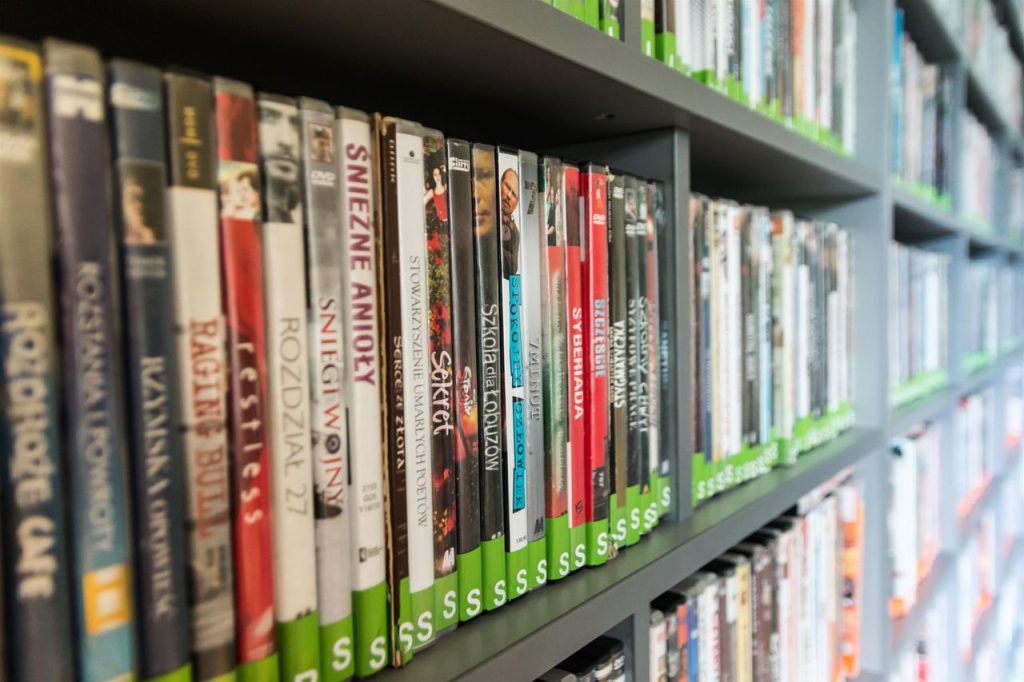
Check the region code first
Commercial DVDs are usually region-coded so that they only play on players sold in the same region. The main DVD regions are:
- Region 1: United States, Canada and Bermuda.
- Region 2: most of Europe, Japan, the Middle East, South Africa and Greenland.
- Region 3: Southeast Asia, South Korea, Taiwan, Hong Kong and Macau.
- Region 4: Latin America, Australia, the Caribbean and most of Oceania.
- Region 5: most of Africa, Russia, Belarus, Ukraine, Central and South Asia.
- Region 6: mainland China.
- Region 0 / ALL: discs coded to play everywhere.
Blu-ray uses three broader regions: A (the Americas, Japan, Korea, Taiwan, Hong Kong and Southeast Asia), B (Europe, Africa, West Asia, Australia and New Zealand) and C (China, Russia and Central and South Asia).
Check the video format (PAL or NTSC)
Region codes are separate from the video standard. NTSC discs run at 480 lines/60 Hz and PAL discs at 576 lines/50 Hz. Players in NTSC countries such as the US generally cannot play PAL discs, while players in PAL countries usually handle NTSC. Most computer software plays both. If a listing does not state the region and format, ask before buying.
Our DVD condition checklist
Our recommendations:
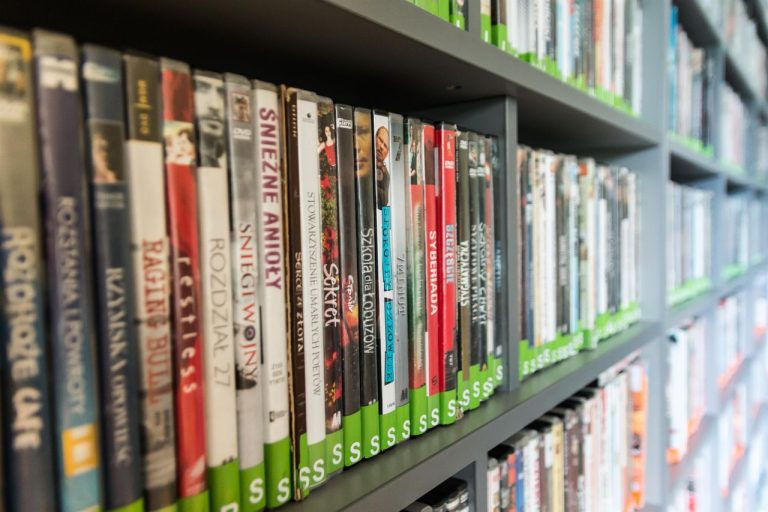
- Ask for photos of the disc’s playing side, not just the case. Look for deep scratches, cracks near the centre hole and discoloured patches.
- Confirm the contents. For box sets, make sure every disc is present and matches the set (e.g. “season 8, disc 3” rather than a disc from another release).
- Look for the original artwork and inserts if you are collecting rather than just watching. Missing inserts reduce completeness.
- Be wary of discs with plain or handwritten labels or photocopied covers being sold as originals. If the listing photos look like home-printed artwork, ask the seller directly.
- Check the edition. Many films were released in more than one version (widescreen and full-screen, rated and unrated, single disc and special edition). Compare the details on the back cover with what you want.
Our Carmen Electra DVD guide lists the main film and TV releases to look out for.
Part 2: Autographs and memorabilia
Why caution matters: Operation Bullpen
Forged autographs are a well-documented problem. Between 1999 and 2006 the FBI, working with the IRS, ran Operation Bullpen, an investigation into forged sports and celebrity memorabilia that uncovered about $100 million in fraud in the United States. It shut down 18 forgery rings and led to more than 60 convictions. In 2000, investigators estimated that between 50% and 90% of memorabilia on the market was fake. That estimate is now more than two decades old and focused largely on sports items, but it shows how widespread the problem became.
Our memorabilia checklist
Our recommendations:
- Treat a certificate of authenticity as a claim, not proof. A certificate is only as reliable as whoever issued it. Check that the issuer is a named, contactable business and that any certificate number can be looked up independently.
- Ask for provenance. Where, when and how was the item signed (a convention, a public signing, a studio fan-mail request)? Photos of the signing, event tickets or original correspondence carry more weight than a story.
- Compare against examples you can trust. Signatures change over time, so compare against examples from the same period from reputable auction houses or official signings.
- Be cautious of very low prices for rare items, multiple identical “signed” items from one seller, and pressure to buy quickly.
- Screen-used or costume claims need strong documentation, typically from the production, a studio sale or a major auction house.
- Unsigned memorabilia (posters, magazines, press kits) is easier to assess: check the printing date, publisher details and condition against the listing.
Our fan guides hub brings together our collector pages, including Baywatch collectibles.
Part 3: Paying and protecting yourself
The US Federal Trade Commission’s online-shopping advice is a good baseline for any second-hand purchase:
- Research the seller. Read reviews from several sources rather than relying on star ratings, and search the seller’s name with words like “complaint” or “scam”.
- Read the delivery, return and refund terms, including who pays return shipping and how long you have to return an item.
- Pay by credit card where possible. Be wary of sellers who insist on gift cards, wire transfers, payment apps or cryptocurrency.
- Keep records of the listing, the seller’s details, messages and your payment statements.
Your dispute rights (US)
Under the Fair Credit Billing Act, charges on a credit card for goods that were not delivered as agreed can be disputed as billing errors. You generally need to send a written dispute to your card issuer within 60 days after the first statement showing the charge. Rules differ outside the US, so check your own card issuer’s terms and your local consumer agency. Marketplace and platform buyer-protection schemes have their own rules and deadlines as well.
Keeping track of what you own
Editor’s note: Keeping a simple record of what you bought, where and for how much, along with the listing photos, helps with insurance, resale and avoiding duplicate purchases. Our free collection tracker is one way to do this.
Sources
- Wikipedia, “DVD region code” (DVD and Blu-ray regions; PAL and NTSC). en.wikipedia.org/wiki/DVD_region_code
- Wikipedia, “Operation Bullpen” (dates, scale, convictions, estimates). en.wikipedia.org/wiki/Operation_Bullpen
- FBI, “Operation Bullpen Overview”, July 2005. fbi.gov
- Federal Trade Commission, Consumer Advice: “Online Shopping”. consumer.ftc.gov
- Federal Trade Commission, Consumer Advice: “Using Credit Cards and Disputing Charges”. consumer.ftc.gov
Related picks on Amazon

DVD · Baywatch Era
Baywatch on DVD
Best for: Fans of the show's late-1990s seasons
Carmen Electra joined Baywatch in season 8 (1997–1998). Check the season numbers in a listing to make sure the set includes her episodes.
Pros
- Season numbers make her episodes easy to identify
- A physical copy you can keep
Cons
- Sets, regions and condition vary by seller
- Some releases cover only selected seasons
As an Amazon Associate, Carmen-Electra.net may earn from qualifying purchases.

DVD / Blu-ray · Scary Movie Era
Scary Movie (2000) on DVD or Blu-ray
Best for: Fans of 2000s spoof comedies
She plays Drew Decker in the film's opening scene. Some releases bundle several films from the series, so check which titles a set includes.
Pros
- Her best-known film role
- Released on both DVD and Blu-ray
Cons
- Rated R in the US
- Bonus features differ between editions
As an Amazon Associate, Carmen-Electra.net may earn from qualifying purchases.
DVD · 2004 film
Starsky & Hutch (2004) on DVD
Best for: Fans of 2000s studio comedies
The 2004 big-screen remake of the 1970s TV series, in which she plays Staci. Make sure a listing is the 2004 film rather than the original TV series.
Pros
- Mainstream studio comedy with a large ensemble cast
- Easy to find on DVD
Cons
- Hers is a supporting role
- Search results can mix in the 1970s TV series
As an Amazon Associate, Carmen-Electra.net may earn from qualifying purchases.